
WHY DO SOME ANTIDEPRESSANTS WORK AND NOT OTHERS?
- Feb 12
- 4 min read

A question clinicians get asked a lot is "why do some antidepressants work and not others?" This is an excellent question, and the short answer is "we don't know."
A much longer answer is that in any given individual drug A may work and drug B may not; but in another individual, the exact opposite may be true. Even more vexing is that there is no way to tell ahead of time which medication is going to work for which individual. We sure wish there was a way to know this ahead of time. But there just isn't.
Making it even more complicated is that, unlike some medications which almost always do at least a little bit for everyone, very often one antidepressant will do absolutely nothing for a given individual, whereas another one will work extremely well. Again, we don't know why this happens.
The one piece of information that is very helpful is whether the patient has a close relative who has responded well (or poorly) to one or more of the antidepressants. This gives us strong guidance about where to start or what to avoid.
Prescribers will also carefully listen to their patients regarding which side effects they might be particularly concerned about, or what problems they are already having. For example, if someone is having trouble sleeping, we would probably choose one of the more sedating antidepressants, whereas if someone was having a lot of lethargy, we would probably choose one of the less sedating or more activating ones. If a person is sexually active we would steer away from ones that could cause sexual side effects.
We also often get asked "which antidepressant is the most effective?" Interestingly, all of the antidepressants have roughly the same level of efficacy. In other words, if you take 100 random patients and put them on any one of the antidepressants, you will see roughly the same percent of patients have a response, and the same percent have a full remission. The answer, therefore, is that all antidepressants are equally effective, at least until you try them.
If the first antidepressant doesn't work, we often will try another one, from a slightly different subclass. For example, we have serotonin reuptake inhibitors (SSRIs) and serotonin norepinephrine reuptake inhibitors (SNRIs). If we start with an SSRI and the patient does not respond, we often will pick an SNRI as our second choice, or vice versa.
But as you see, it is often a bit of trial and error, which sometimes can leave patients feeling a bit frustrated understandably, especially since each new medication trial takes at least 4 weeks. But there is just no getting around this. And this is not unusual. If you look at any medical condition, there will always be some people who will respond to this medicine and not that one.
Sometimes we get asked about genetic tests. These are tests which can be done in the office, involving a cheek swab. They generally are performed for cash payments around $350. They often appear to make claims about guiding clinicians towards one medicine or another. What they mostly do is tell us how well the individual metabolizes each different drug and therefore tells us whether to start with a low dose, an average dose, or a high dose. This is somewhat useful information, but not nearly as useful as being able to predict who is going to respond to which drug, which they cannot do. They can give us a bit of guidance as to whether to pick an SSRI or an SNRI, but not which individual drug within each class. They can also tell us whether a person is more or less likely to respond to one of the booster medications known as L-methylfolate. Whether these tests are worth the expense is something that you should discuss with your provider.

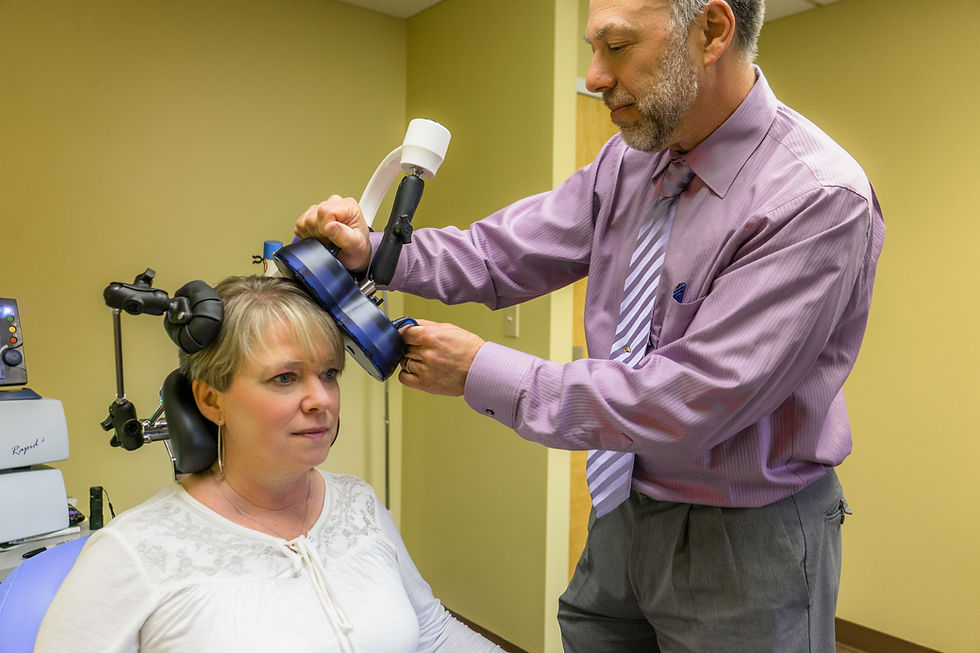
Doctor Warstadt is one of the partners at Southeastern Psychiatric Associates, and has been with the practice since 1989. He includes both psychotherapy and psychopharmacology in his practice, often weaving both together. He was deeply involved in bringing TMS to the group beginning in the fall of 2015. He was trained in TMS theory and technique by Dr. Linda Carpenter, one of the pioneers in the field, and is a member of the Clinical TMS Society.
If you have questions about why antidepressants work for some people and not others, or you are feeling discouraged by the trial-and-error process of depression treatment, you are not alone. Choosing the right medication often involves thoughtful evaluation of symptoms, side effects, family history, and careful follow-up over time. Having an experienced psychiatric provider guide that process can make a meaningful difference.
At Southeastern Psychiatric Associates Randolph, we provide comprehensive depression treatment and medication managemen, serving patients throughout the South Shore and Greater Boston area, including Braintree, Quincy, Milton, Canton, Stoughton, Avon, Holbrook, Weymouth, Brockton, Dorchester, and Cambridge. If you are looking for guidance on antidepressants, SSRIs vs. SNRIs, genetic testing, or alternative treatment options for depression, contact our Randolph, Massachusetts office to schedule a consultation and discuss the next step in your care.


Comments